2026 11 23


2026 11 21

2026 11 20


2026 11 18


2026 11 17


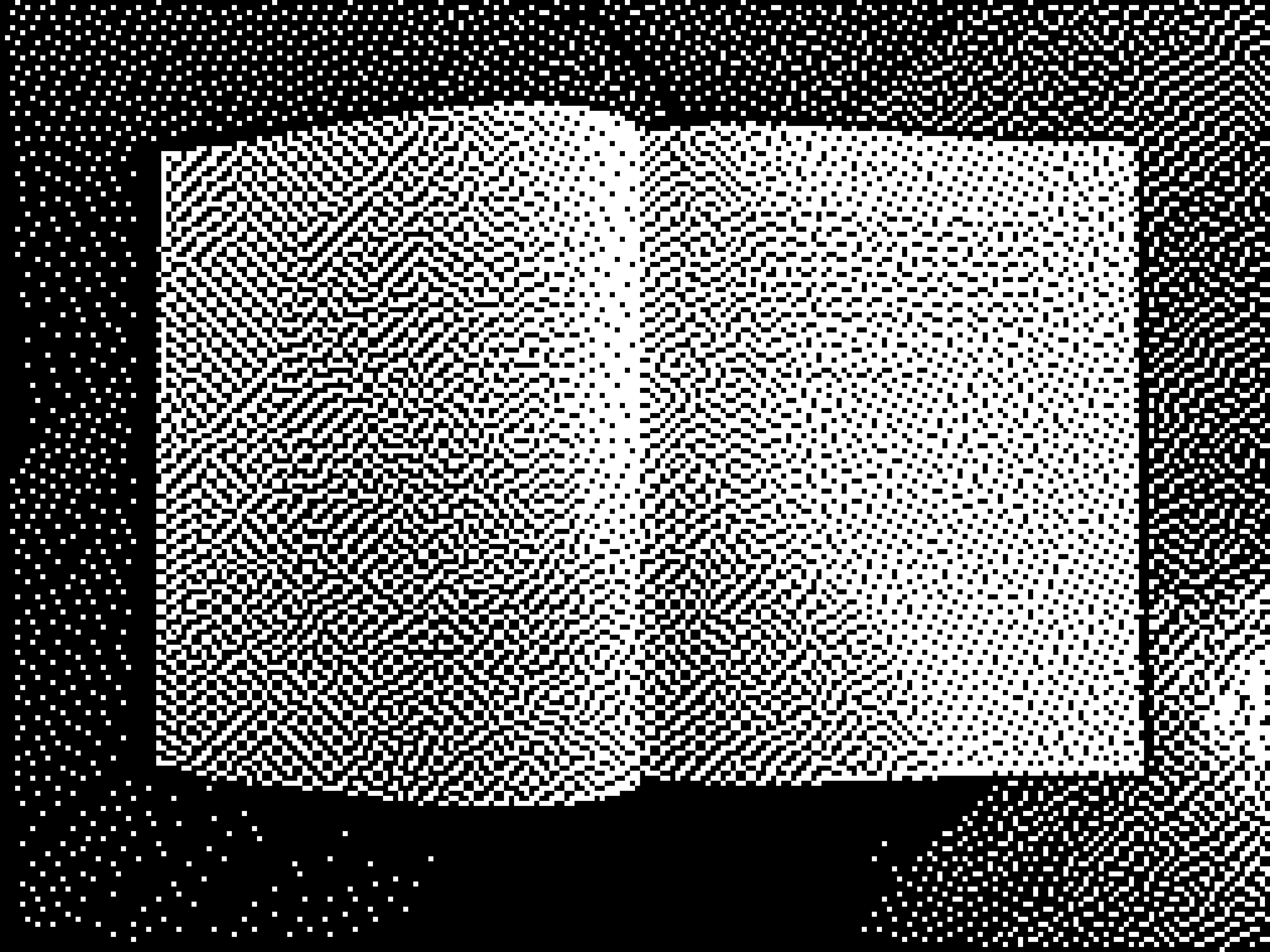
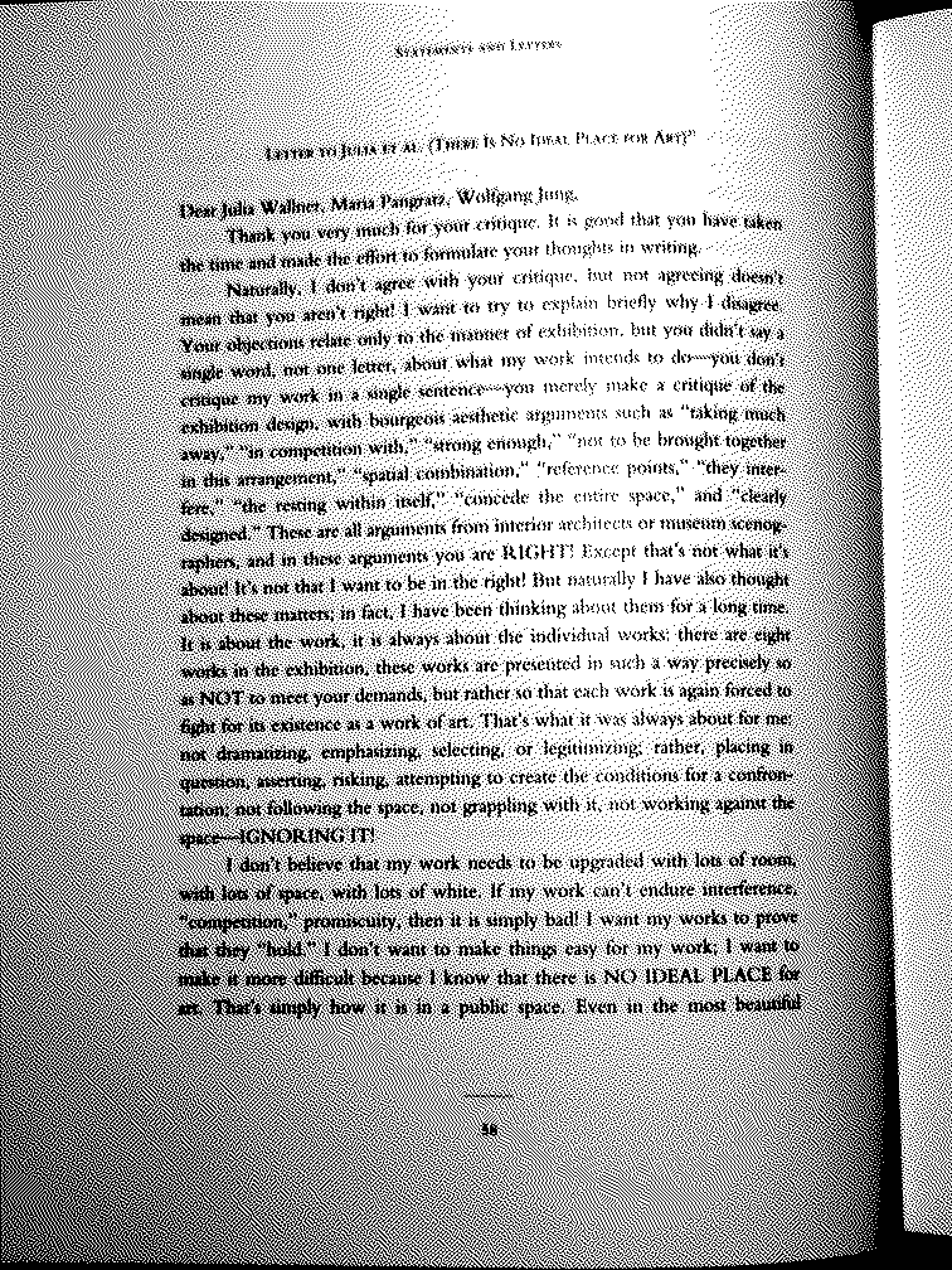
This image shows an open book with text on both pages, displayed in a high-contrast, black-and-white, possibly dithered or photocopied style. The pages are brightly lit, making the text appear dense, and the book is set against a dark background.
Dear Julia Wallner, Maria Pangratz, Wolfgang Jung, Thank you very much for your critique. It is good that you have taken the time and made the effort to formulate your thoughts in writing. Naturally, I don't agree with your critique, but not agreeing doesn't mean that you aren't right! I want to try to explain briefly why I disagree. Your objections relate only to the manner of exhibition, but you didn't say a single word, not one letter, about what my work intends to do—you don't critique my work in a single sentence-you merely make a critique of the exhibition design, with bourgeois aesthetic arguments such as "taking much away," "in competition with," "strong enough," "not to be brought together in this arrangement," "spatial combination," "reference points," "they inter-fere," "the resting within itself," "concede the entire space," and "clearly designed." These are all arguments from interior architects or museum scenog-raphers, and in these arguments you are RIGHT! Except that's not what it's about! It's not that I want to be in the right! But naturally I have also thought about these matters; in fact, I have been thinking about them for a long time. It is about the work, it is always about the individual works: there are eight works in the exhibition, these works are presented in such a way precisely so as NOT to meet your demands, but rather so that each work is again forced to fight for its existence as a work of art.
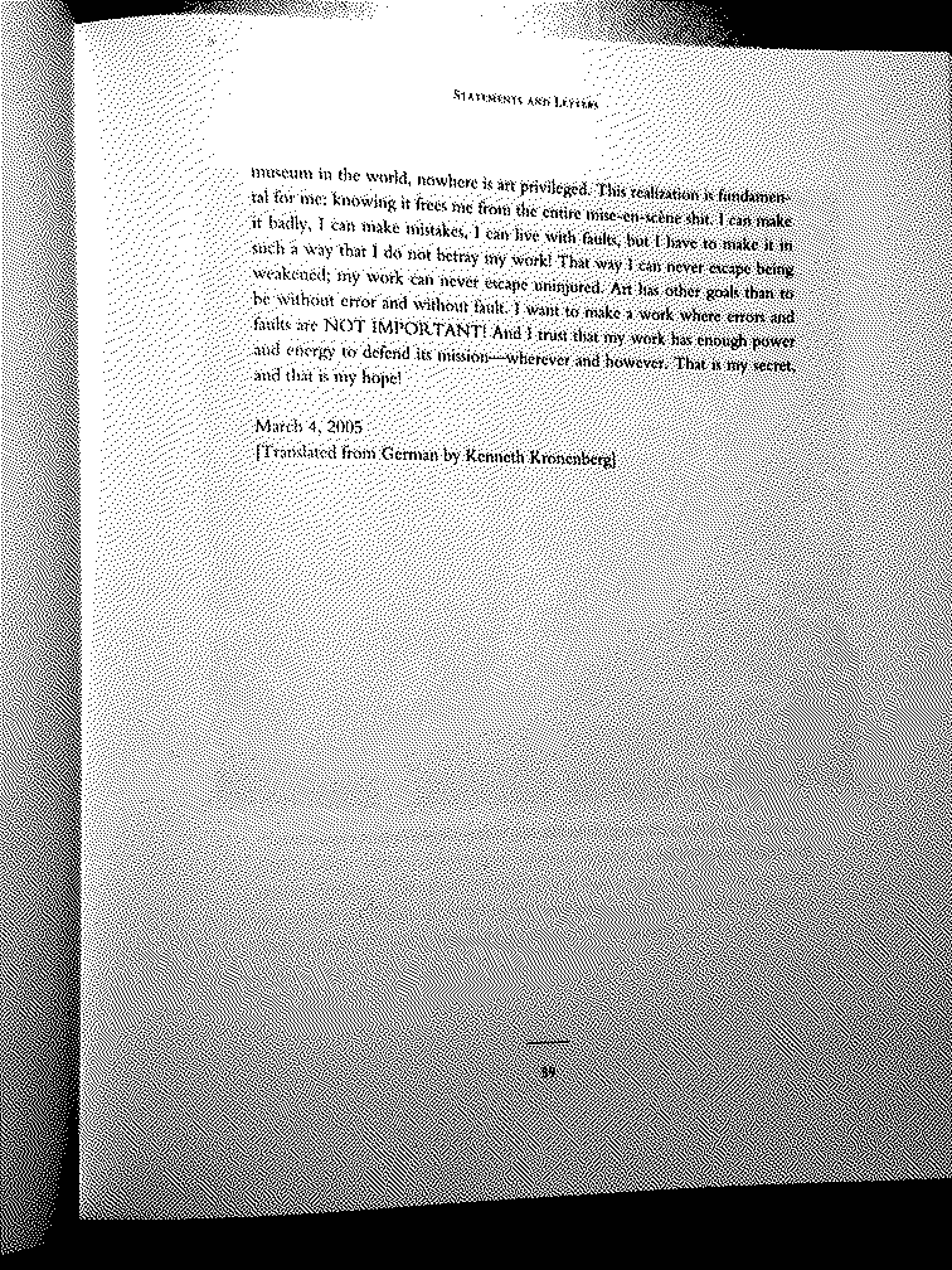
That's what it was always about for me: not dramatizing, emphasizing, selecting, or legitimizing; rather, placing in question, asserting, risking, attempting to create the conditions for a confron-tation; not following the space, not grappling with it, not working against the space-IGNORING IT! I don't believe that my work needs to be upgraded with lots of room, with lots of space, with lots of white. If my work can't endure interference, "competition," promiscuity, then it is simply bad! I want my works to prove that they "hold." I don't want to make things easy for my work; I want to make it more difficult because I know that there is NO IDEAL PLACE for art. That's simply how it is in a public space. Even in the most beautiful museum in the world, nowhere is art privileged. This realization is fundamental for me; knowing it frees me from the entire mise-en-scène shit. I can make it badly, I can make mistakes, I can live with faults, but I have to make it in such a way that I do not betray my work! That way I can never escape being weakened; my work can never escape uninjured. Art has other goals than to be without error and without fault. I want to make a work where errors and faults are NOT IMPORTANT! And I trust that my work has enough power and energy to defend its mission-wherever and however. That is my secret, and that is my hope! March 4, 2005 [Translated from German by Kenneth Kronenberg]

LETTER TO JULIA ET AL. (THERE IS NO IDEAL PLACE FOR ART), Thomas Hirschhorn


2026 11 16


2 activities

2026 11 15


2026 11 14

2026-11-14 Changelog

A post composer at /new and a rebuilt edit page, so I can write, edit and syndicate on the site itself, with drafts kept in a private repo. All posts are Markdown now. Imported the Bluesky and Mastodon archive backlog, with thread rollups, link cards and quoted posts. New sitewide nav and 404 page, site search, post type filters, a much faster library, and branch previews.

Read more

2026 11 13


Against disliteracy

aworkinglibrary.com/writing/against-disliteracy

Mandy Brown:

When we talk about an absence of literacy, about how few people seem able to read thoughtfully or deeply, we are not talking about something that merely happens, an occurrence without actor or reason, like an asteroid slicing through the atmosphere. We are witness to a strategic all-out attack and the ruins it leaves behind. We are not post-literate but dis-literate, subject to a concerted and well-funded effort to separate us from literacy, an effort proliferated across schools, workplaces, and, perhaps most perniciously, our homes and pockets.

From channel surfing to doomscrolling, we have long been inundated with technology designed to stupefy and placate. The latest assault tries to transform reading from relation into information. Rather than a collaboration between reader and writer, we get knowledge stripped of its context and color, reduced to data points presented in such a way as to brook no dissent. Let the machines read for us while we lay about, listening to neat summaries of books and papers, smug in our time-saving abilities—though what, precisely, we have saved that time for remains to be seen. Let the machines write for us too, displacing thinking and making with recording, every answer to every possible question available at the barest command. No curiosity, no desire that cannot be immediately sated and therefore squashed before it comes to life.



2026 11 12

2026 11 11

2026 11 09

2026 11 08


2026 11 07


2026 11 06


Trust in Rock (Finale) 30:23

bluegenetyranny.bandcamp.com/track/trust-in-rock-finale

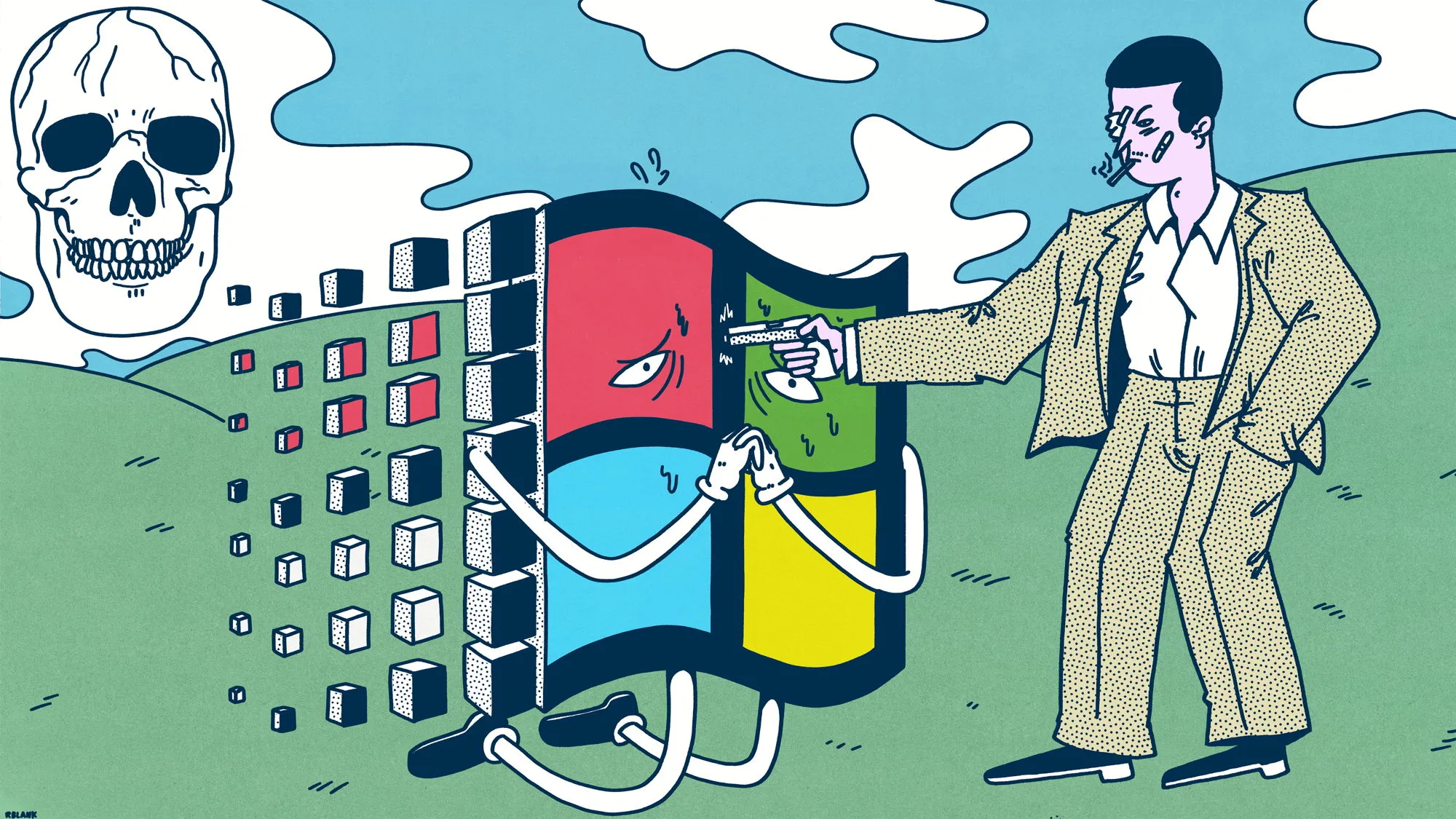
"Blue" Gene Tyranny, Peter Gordon and the Trust in Rock band performed Trust in Rock over three nights, November 4–6, 1976, in Gallery A of the University Art Museum in Berkeley, CA. The album was recorded on the final night, 50 years ago today.

To mark the anniversary, the album now includes "Trust in Rock (Finale)," a previously unreleased 30-minute track discovered after the album came out in 2019.

2026 11 05


2026 11 04

2026 11 03

2026 11 02


2026 11 01


2026 10 30


2026 10 29

2026 10 20

2026 10 17


2026 10 16


2026 10 15


2026 10 13


2026 10 11

2026 10 10

2026 10 09


2026 10 08


2026 10 07


2026 10 04


2026 10 03

2 activities

2026 10 01


2026 09 29


2026 09 23

2026 09 20

2026 09 19

2026 09 18

2026 09 17

2026 09 15

2026 09 14


2026 09 13


2 activities


2026 09 11


2026 09 08

2026 09 07


2026 09 05

2026 09 04


2026 08 28

2026 08 18

2026 08 16

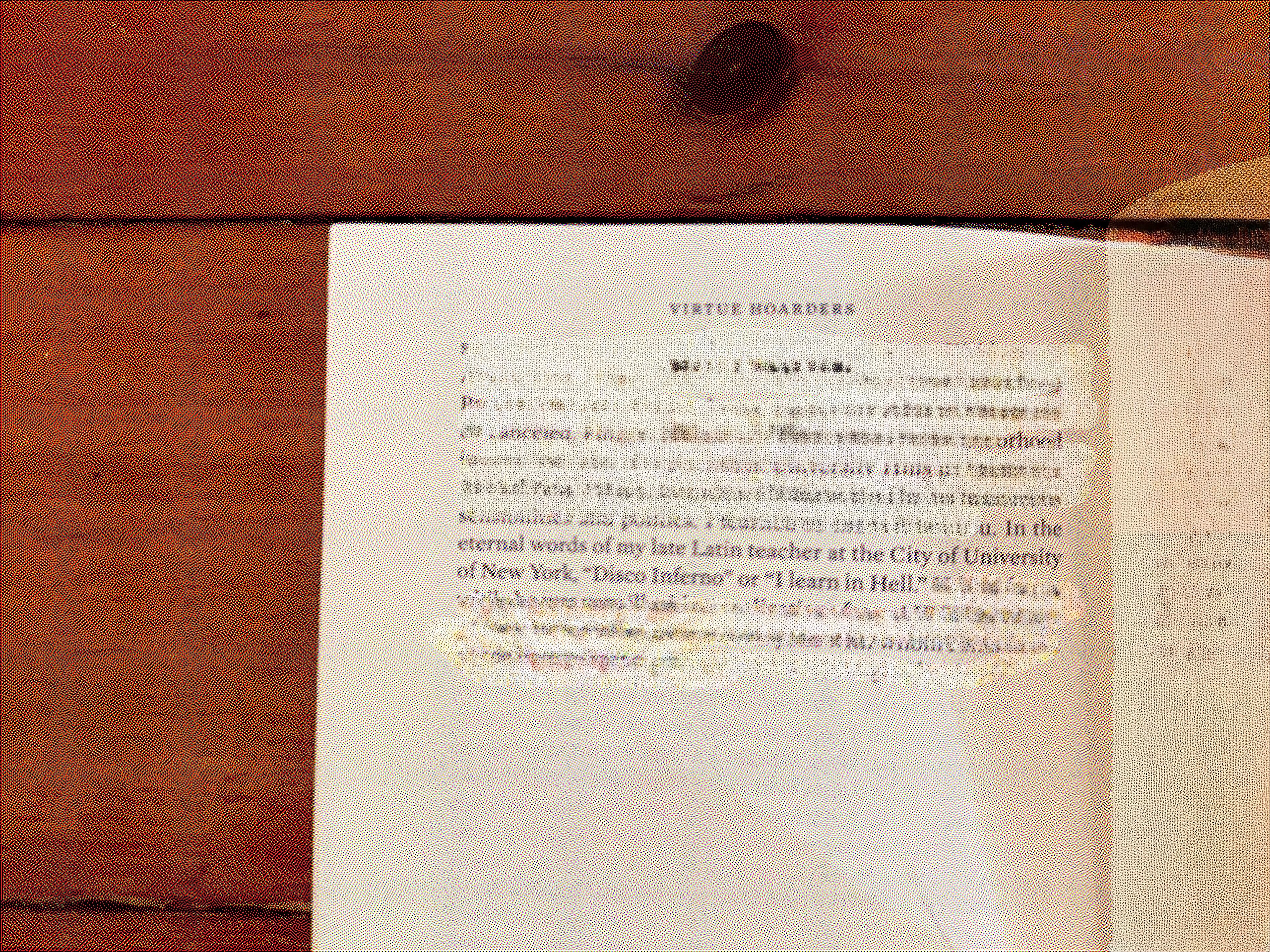
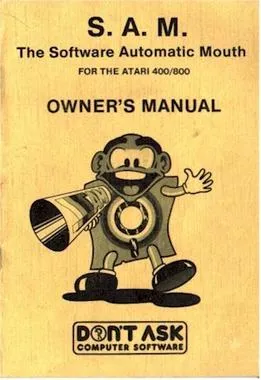
A pixelated photo of a page of a book with all text blurred out except two segments reading “Virtue Hoarders” and “In the eternal words of my late Latin teacher at the City of University of New York, “Disco Inferno“ or “I learn in Hell.“”

A pixelated photo of a page of a book with all text blurred out except two segments reading “Virtue Hoarders” and “In the eternal words of my late Latin teacher at the City of University of New York, “Disco Inferno“ or “I learn in Hell.“


2026 08 14

2026 08 11

2026 08 05

2 activities

2026 08 04

2026 08 01

2026 07 26

2026 07 23


2 activities


2026 07 22

2026 07 21

2026 07 16


2026 07 15

2 activities


2 activities

2026 07 14


2 activities

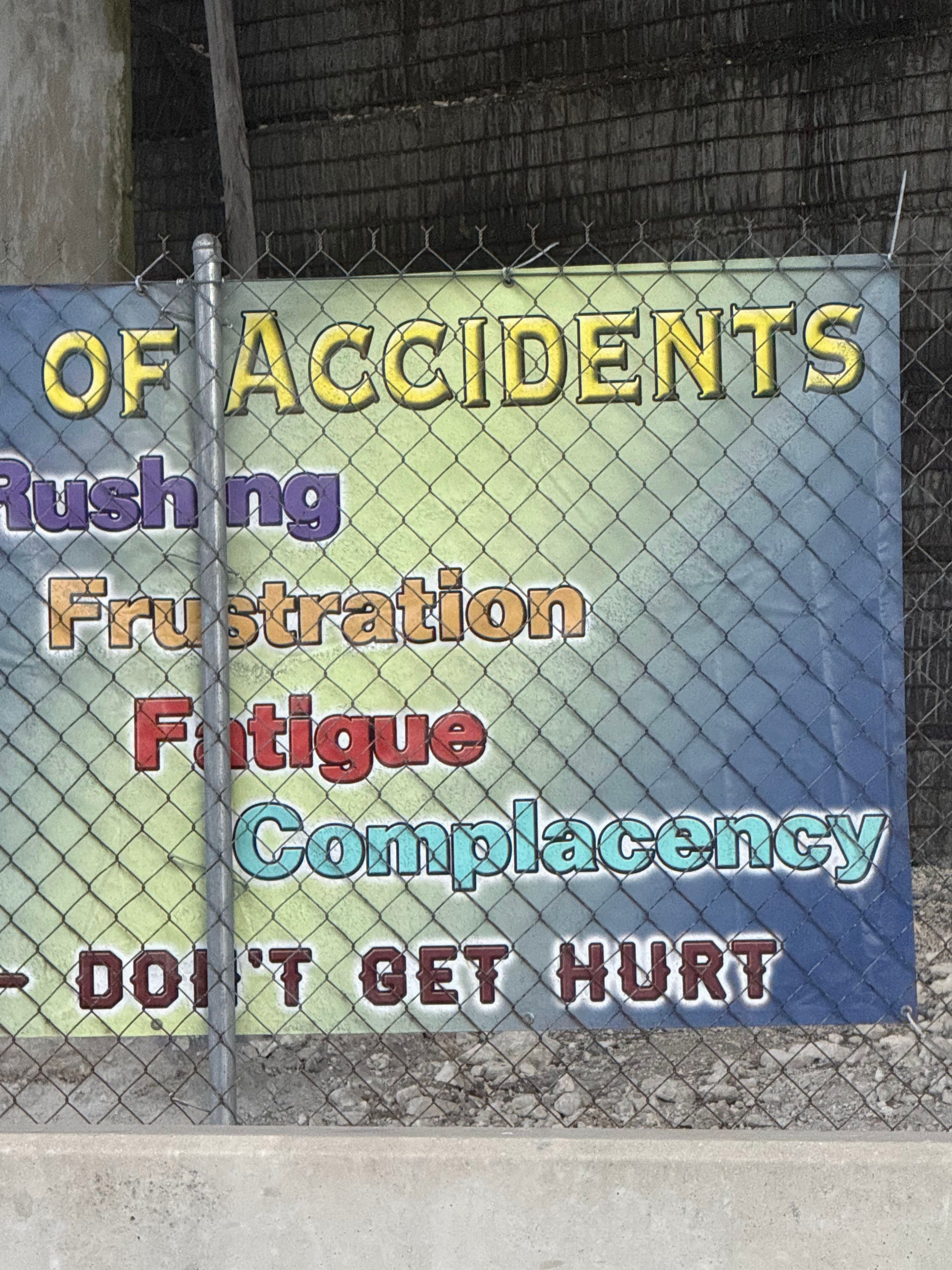
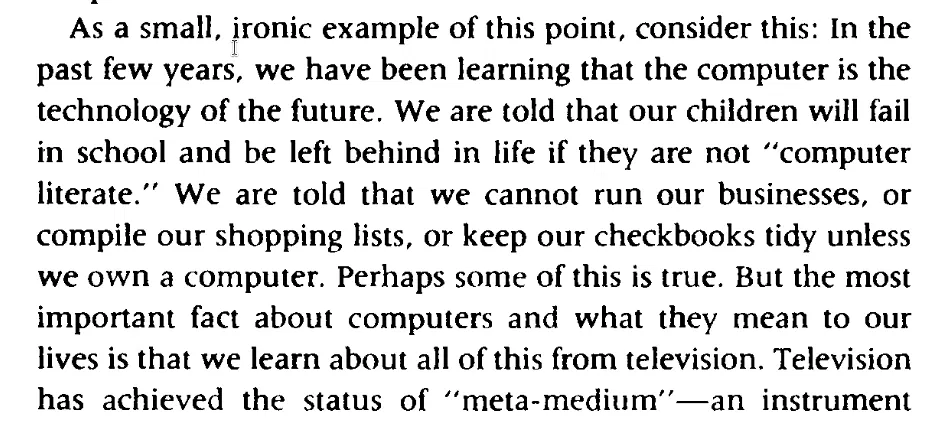
This photo shows a colorful banner sign behind a chain-link fence. The sign, which has a gradient background of blues, greens, and yellows, features large, bold text. Partially visible words include "OF ACCIDENTS", followed by "Rushing", "Frustration", "Fatigue", and "Complacency" in different colors, all leading to the message "DON'T GET HURT" at the bottom. The chain-link fence is prominent in the foreground, partially obscuring the text on the sign, and there's a concrete base visible below the fence.

affirmations
2026 07 13


2026 07 12

2026 07 11


2026 07 09


2026 06 30

2026 06 24


2026 06 03

2026 05 26


2026 05 06

2026 05 04

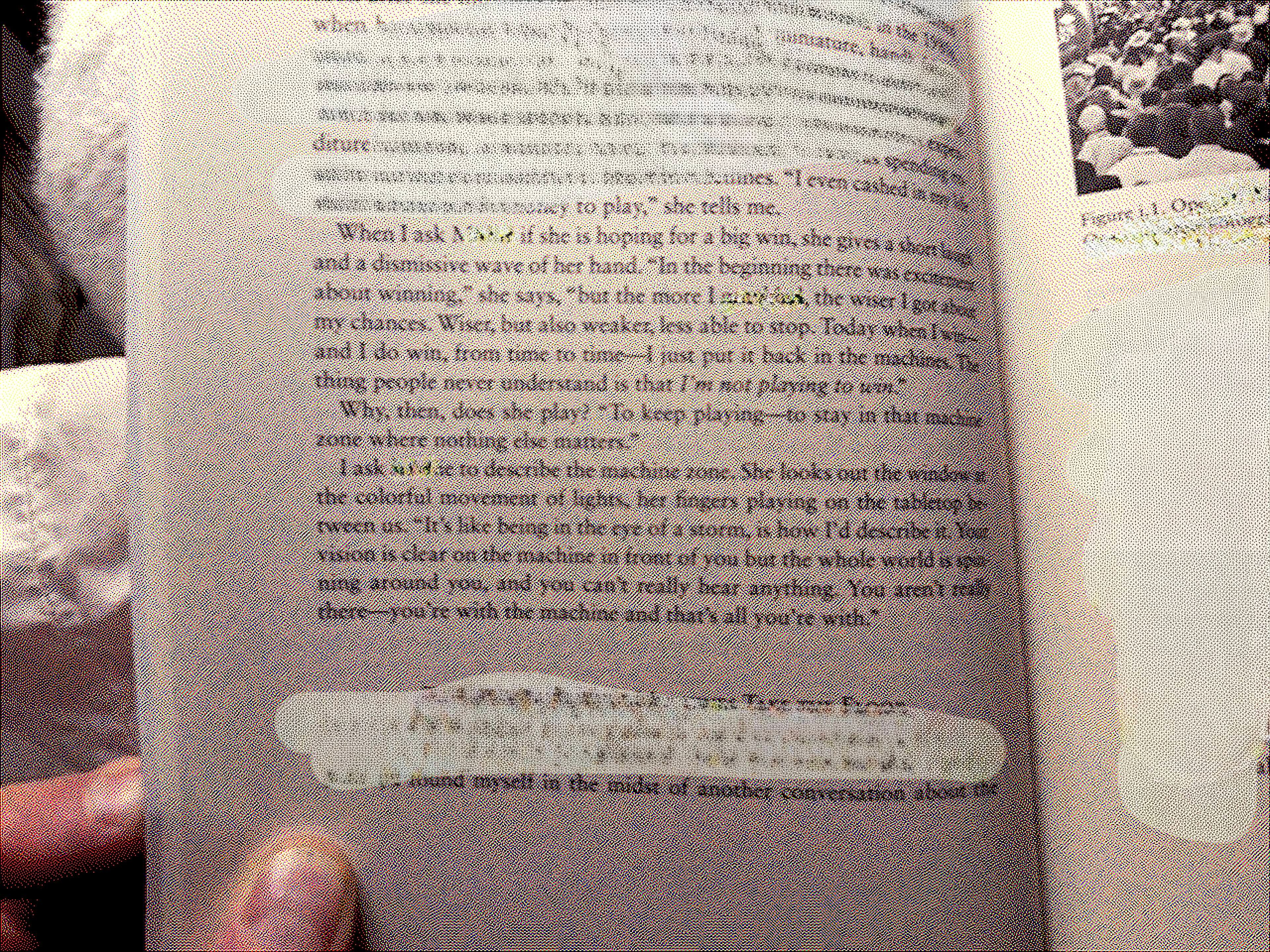
The image shows a page from a book, held open by a hand visible at the bottom. The photo is somewhat grainy and slightly out of focus, with parts of the text obscured by what looks like light-colored highlighting or smudges.
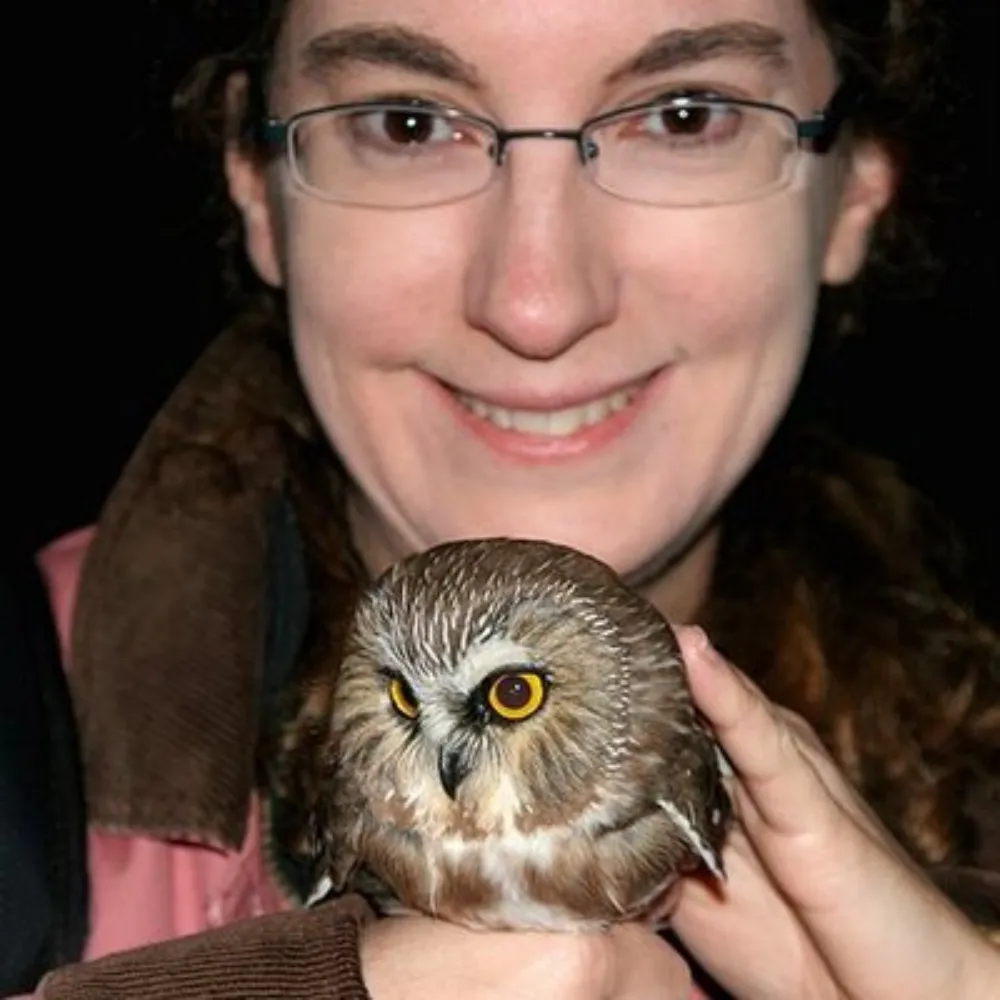
The visible text appears to be from a book about gambling — specifically slot machine play. It includes an interview with a woman (her name partially obscured) who describes her relationship to the machines. Readable passages include her saying she’s “not playing to win,” but rather “to keep playing—to stay in that machine zone where nothing else matters.” She describes the machine zone as “like being in the eye of a storm… your vision is clear on the machine in front of you but the whole world is spinning around you… you’re with the machine and that’s all you’re with.”
In the upper-right corner there’s a black-and-white photograph labeled “Figure 1.1” showing what looks like a dense crowd or rows of slot machines.
Based on the content and the “machine zone” language, this looks like a page from Natasha Dow Schüll’s Addiction by Design: Machine Gambling in Las Vegas.​​​​​​​​​​​​​​​​
The image shows a page from a book, held open by a hand visible at the bottom. The photo is somewhat grainy and slightly out of focus, with parts of the text obscured by what looks like light-colored highlighting or smudges. The visible text appears to be from a book about gambling — specifically slot machine play. It includes an interview with a woman (her name partially obscured) who describes her relationship to the machines. Readable passages include her saying she’s “not playing to win,” but rather “to keep playing—to stay in that machine zone where nothing else matters.” She describes the machine zone as “like being in the eye of a storm… your vision is clear on the machine in front of you but the whole world is spinning around you… you’re with the machine and that’s all you’re with.” In the upper-right corner there’s a black-and-white photograph labeled “Figure 1.1” showing what looks like a dense crowd or rows of slot machines. Based on the content and the “machine zone” language, this looks like a page from Natasha Dow Schüll’s Addiction by Design: Machine Gambling in Las Vegas.​​​​​​​​​​​​​​​​

2026 05 02

2026 04 25

2026 03 21

2026 02 07

2026 01 19

2026 01 18

2026 01 15

2026 01 03


2026 01 01